
Practical Eloquence Blog

Book reviews - Sales Books

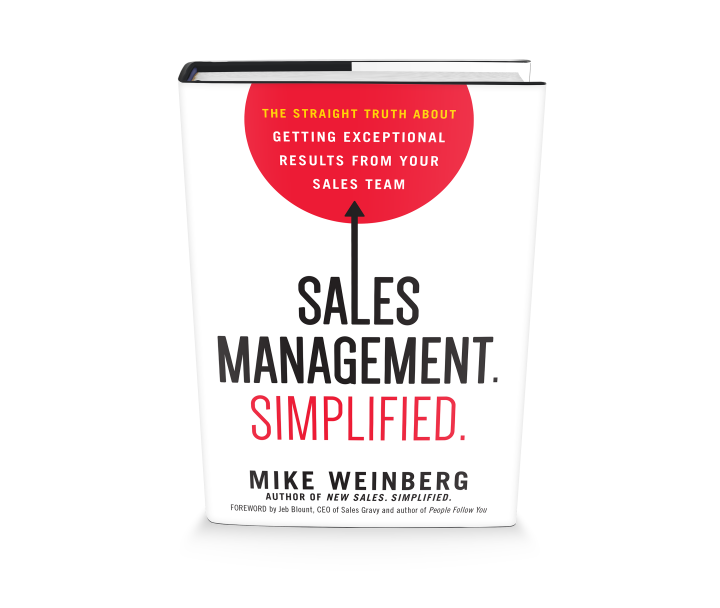
Sales Management. Simplified.

I’ll get to my review of Mike Weinberg’s book, Sales Management. Simplified.: The Straight Truth About Getting Exceptional Results from Your Sales Team in just a second, but first, we have to take a quick detour.

Despite spending big in free agency during the offseason to acquire players like Ndamukong Suh, and spending lavishly on high tech tools such as GPS trackers and sensors to analyze practices, the Miami Dolphins have won only one game this season, so they fired their head coach earlier this week.

Enter a new interim head coach, Dan Campbell, who was promoted from his position as the tight ends coach and who looks like he could still suit up and play today. They held their first practice under the new coach yesterday, and it was definitely a different approach. Almost the entire practice consisted of one-on-one drills, where players went at each other in full pads. Campbell’s aim is to make each of his players “violently compete” during practice, and his description of practice afterwards was priceless:

“Everything else was all about being primates again. Every one of those guys. Just back to the days where, hey, you line up and you go.”

What does that have to do with Sales Management. Simplified.? Think of the Dolphins as a sales organization that needs to change its ways if it wants to get back to winning ways—Campbell and Weinberg appear to be “twin sons from different mothers”, as it relates to how to get the best out of people who work in a performance-oriented contact sport.

I’ll give you just two examples to illustrate the wisdom and practical advice contained in the book. The first is that sales managers have to get out from behind their desks and go right to the action to observe and coach their players.

The Dolphins have been operating like many sales organizations today, by over-relying on fancy measurement tools. They hired a director of sports performance and director of analytics, and equipped each player’s shoulder pads with GPS trackers and sensors that measured energy expenditure, distance traveled and speed during practice, temperature, etc. At the end of every practice, the numbers are analyzed, and presumably the coaches would use the data to make adjustments and refinements in a constant quest for improvement.

All that data, analysis and tweaking has not prevented a 1-3 record, a statistic which hides how embarrassing their play has been. They haven’t just lost three games out of four: it’s the way they have lost. They have been quite simply outplayed and outmuscled on a man-to-man basis at almost every position.

The key lesson for sales managers is that all the fancy strategy, tools, and measurements are great, but completely useless unless you get the basics right. Sales is just as much a contact sport as football, where success is a matter of what happens when a salesperson sits across the desk from a prospect. In sales, just as in football, “you line up and you go”. This may sound crude, but it’s still two primates facing each other, speaking, listening, and presumably influencing each other.

Too much focus on shiny new toys such as fancy sensors and measuring tools can take away from the best tracking technology a sales manager has: their eyes and ears. As Weinberg tells us, those basic tracking tools are best deployed in three ways: coaching salespeople one-on-one, conducting productive sales meetings, and riding with salespeople in the field to directly observe what’s going on. How often are you getting out into the field and actually observing what goes on in sales calls? What are your salespeople actually doing and saying when in front of customers? How are customers reacting?

The second lesson is that culture counts—a lot. Weinberg spends the first half of the book describing dysfunctional sales cultures, where there is little or no accountability, sales is seen as a poor stepchild to other corporate functions, and various other symptoms that you might recognize from sales cultures that you may be in.

The best sales cultures are competitive, blunt, accountable, focused on selling, and relentlessly self-improving. These “shared attitudes, values, goals and practices” are what turns a collection of individuals of diverse talents into an effective team. Coaches can’t be everywhere at once, and culture provides the guidance that drives performance.

There’s a lot more in Mike’s book than I can write about here, so whether you’re a beginning sales manager, an experienced sales manager trying to improve an underperforming team, or a successful sales manager who wants to sustain your success, this book is for you.

Now, if he could just do something for my poor pathetic Dolphins…
Read More
Sales

The Accidental Salesperson

Some people are natural-born salespeople. Not me. I may not have been the world’s worst salesperson when I started out, but I’m sure I was close. In this video, I tell the story of the mistake I made that taught me the only lesson I needed to turn that around.


Read More
Book reviews - Sales Books

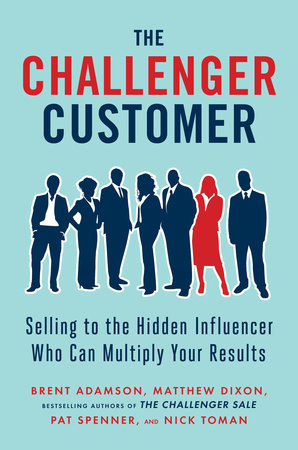
The Challenger Customer

The folks at CEB have done it again—written a book that challenges traditional thinking about B2B sales and introduced a new character in the long-running conversation about understanding and influencing the customer’s decision making process.

Trying to describe the ideas in The Challenger Customer: Selling to the Hidden Influencer Who Can Multiply Your Results reminds me of the guy who took a speed-reading course and then bragged that he had read War and Peace in an hour. When asked for a synopsis of the book, he said: “It’s about Russia.”

In that spirit, The Challenger Customer is about helping your customers buy. In sales, we lament how hard selling is nowadays; buyers have far more knowledge earlier in the sales cycle and use it to drive even complex solutions to commodity status. The problem with that is that often it’s not in the buyer’s own best interests to buy the lowest-cost solution, yet many buyers make the sub-optimal decision because they can’t help it: buying is harder than ever before.

Buying is harder because more stakeholders are involved: an average of 5.4 stakeholders in complex B2B deals, according to the book. That’s complicated by the fact that the most important attribute that senior decision makers consider when choosing a supplier is widespread support across the organization.

The traditional sales response to this challenge is to simply work harder. If you need to get more yesses to close the sale, you just have to call on more people and get their buy-in, right? The revelation—at least to me—is that, that strategy will actually make it less likely that you will get the sale. In other words, 1+1+1=0! That’s because each stakeholder will support the deal for their own reasons, and the overlap among interests becomes harder to achieve as the number of stakeholders rises. As a result, the decision gets driven down to the lowest common denominator: either status quo or the simplest, cheapest choice.

The challenge, then, is not to get a serial collection of yesses, but a collective yes, in which each stakeholder converges around a common vision. It’s like the parable of the six blind men and the elephant. Each one sees only a small part of the whole, so someone needs to make them see the whole elephant. That’s a daunting task for any salesperson, but fortunately there’s a solution: enter the Mobilizer.

The Mobilizer is the internal Challenger, the person who is willing to make waves to and drive the vision. They will only do it if they perceive that the pain of staying the same is greater than the pain of change. The book explains in great detail how to identify the three types of mobilizers, get them to agree on the need for change, and then coach and equip them to sell the need internally.

I give The Challenger Customer five stars for three reasons:

  • It’s very much about outside-in thinking. Start from the customer’s perspective, understand their need to change, and don’t lead with your product.
  • Just like their first book, The Challenger Sale, it’s backed up by tons of primary research, very credible examples, and detailed implementation suggestions.
  • The third reason is why I didn’t like the book on first reading, and then I did: the approach and techniques are devilishly difficult. You have to learn how to identify mobilizers, tailor your approach to each of the three types, help them get the message across effectively to the other stakeholders, produce the right materials, and a host of other challenges. But by the second reading, I realized that the difficulty is actually the best reason for a company or even an individual sales rep to adopt the approach. If it were easy, anyone could do it, and then it would not be an advantage anymore.

That said, this is not really a book for salespeople. Only a select few (like the type who reads this blog, wink-wink) would be able to master the techniques. It takes a joint effort by sales and marketing to generate the insights and produce the materials to equip the Mobilizer to sell the insights internally, and it won’t happen overnight.

I suggest you read this book, study it, challenge it, and most importantly, use it to change the way you sell.

Read More
Lean Communication

User-friendly Language Part 3: Friction

In this three-part series on user-friendly language, we’ve seen how we make it too hard for listeners to understand us, either by blowing smoke on purpose, or generating FOG inadvertently. While we can go a long way to clearing up our communication by getting rid of those, we may still get tripped up by friction.

Friction slows down vehicles and saps the power from their engines. Friction in communication does the same thing: it’s my name for speech patterns that prevent you from being as smooth and confident-sounding as you should. These patterns can reduce value of your message and add to waste in its expression. They reduce the likelihood that people will believe your message and act on it—if someone asked you to do something,  would you be more likely to agree if they sound completely confident and sure of their message?

The two forms of friction that add waste to communication and reduce clarity are hedges and filler words.

Hedges

Hedges are phrases that pull your message back from absolute, such as, I think, maybe, it seems, and so on. They can make it seem so that you don’t sound totally confident in what you’re saying. It’s common sense, but there are also numerous studies that confirm that they “lead to negative perceptions of the policy, source and argument.”[1]

Hedges are not bad, if they are intended as such. In some cases, you need grey areas, so you may want to use them as qualifiers. For example, you may not want to intend or signal complete certainty. If you say, “I think we’re going to make the schedule”, you are raising a flag that alerts your listener that there may be risks, and they can probe for more information if they choose. In the study referenced above, use of the “professional hedges” are not perceived poorly by listeners, and may in fact add to your credibility.

But hedges become a problem when they’re a normal part of your speaking style, even when you’re completely certain of something. They sap power from the strength of your statements and rob the courage of your convictions.

The only way to combat these stylistic hedges is to become aware of them, which you can do by listening to yourself, or by asking others for their opinion. Once you’re aware, it’s not hard to catch yourself and weed them out, but it does take discipline and practice to make it a permanent part of your style.

Filler words

Filler words are funny. On one hand, everyone knows that they can be a problem for speakers, and in fact they are the most-commented-on behaviors that peer coaches in my presentations classes pick up on. On the other hand, very few people realize the extent to which they themselves use them. I’m not referring just to ums and ahs; you know, like, and so are also extremely common, the latter two more so among millennials.

Filler words are not always a bad thing; so don’t obsess over them. They’re a normal part of two-way conversation, and in that case they’re actually useful because they let the other person know you’re not done with what you’re saying. By some estimates, we use filler words once every ten words, and it’s usually not noticeable because they’re so common—ordinary speech is infested with them.

The problem is that when you speak to groups, they don’t add anything to what you’re saying, and can be a problem when they’re excessive. The president of the bank where I once worked was a magnetic and dynamic speaker in small groups, but when the audience hit double digits, he would morph into a stuttering blob of jelly—so much so that it became a terrible distraction.

What does excessive mean? There’s no numerical definition, but the simple rule is that they are a problem when others begin to notice them. You’ve probably been in that situation when listening to a speaker: if you pick up on their filler words, you soon pay attention to nothing else.

In that case, you’ve got some work to do to minimize (complete elimination is possible, but usually is not worth the effort) them. The first step is to figure out if it’s a problem; you can try to listen to yourself to gauge it, or ask a colleague for their opinion, because you are usually not the best judge.

The simple advice is to become comfortable with silence—there’s no need to “fill” a pause with sound. In fact, pure silence can do more than simply avoid the friction of a filler word—it can in fact add power to your speech.

But that’s easy to say and hard to do, so if that doesn’t work, the next step is to create consequences. Toastmasters International has a practice called the “ah” bell, in which a designated audience member rings a bell every time a filler word is uttered. It’s tough love, but it works amazingly well. Having attention called loudly and embarrassingly to each filler word quickly primes your mind to get rid of them. I’ve also had success with clients who offered to pay their colleagues a quarter (or more) for every one they hear.

Besides awareness and consequences, one of the best antidotes to filler words is preparation and practice. The more you know your material, the less likely you’ll find yourself searching for the next thought or the right word. I’m especially reminded of that myself as I explore the unfamiliar territory of recording video; it’s always so much smoother after one or two tries to find my stride.

In our distracted world, simply maintaining someone’s attention is a difficult challenge, so you should do everything you can to make it easy for others to grasp your messages. That’s why lean communicators do themselves and their listeners a favor by making their language user-friendly—free of smoke, fog, and friction.

[1] For example: Amanda M. Durik, M. Anne Britt, Rebecca Reynolds, Jennifer Storey, The Effects of Hedges in Persuasive Arguments, 2008: Journal of Language and Social Psychology.

Read More
1 66 67 68 69 70 197