

Practical Eloquence Blog

Expression - Lean Communication - Persuasive communication

The Persuasive Power of Numbers and Detail

Gauging from what’s happening in politics this season, fact-based persuasion has gone woefully out of style. And it’s not just politics—one of the most common themes in the sales and persuasion blogosphere is that emotion rules persuasion. You don’t need to have a detailed grasp of the facts to make your case, because anyone can look up the details. Impressions and emotions sway decisions, numbers and details simply bore people.

But when you tear yourself away from a computer screen and pay attention to what’s happening in the real world, it’s clear that having a deep command of the facts—and being able to speak them at the rate of normal conversation without having to use your slides as a crutch—still has tremendous persuasive power. In fact, when everyone else is relying on vague, unsupported emotional appeals, those who state their case calmly, but with airtight confidence based on a tenacious grasp of the evidence, can stand out because hardly anyone does it anymore.

I’ve seen this phenomenon repeatedly over the past several months, as I’ve been involved with a group that has been fighting a battle against overdevelopment in my city. Our little band of dissidents lacks the money or influence that the developers and politicians have, and we’ve learned the hard way that emotional appeals at City Commission meetings are simply ignored. But we’ve also figured out that we can get attention by carefully researching the issues and backing up everything we say.

We’ve also learned that nothing is drier than too many numbers in a presentation, right? Actually, I’ve seen that if done correctly, rattling off a series of numbers from memory can have an enormous impact on the minds of your listeners. Paul, a member of our group, is a master at this. When we met with the editorial board of our local paper to make our case, Paul began explaining the public safety impact that the project would have, citing numbers such as response times, traffic delays, number of incidents, etc. Halfway through his spiel the paper’s editor interrupted and said: “You have an amazing grasp of the numbers!” That’s when I knew we had made our point.

In another public meeting, Paul’s detailed analysis of the weaknesses in the developer’s traffic study was so devastating that when the traffic expert tried to rebut his testimony, every time she mentioned a number, she looked at him as if she needed approval.

These examples point out another benefit of fact-based persuasion. When people are already emotionally invested in their own opinion on a matter, it’s extremely difficult to change their minds with an emotional appeal; they will simply dig an and defend their point of view even harder. Even if they agree with you, conceding your point may make them lose face. But if confronted with irrefutable facts, this “new information” gives them an honorable way out of their position, and they can show themselves to be reasonable people by changing their minds. This is especially important if you’re challenging those who are more powerful; a torrent of facts can be your best protection and surest way to succeed.

There is one key to keep in mind if you want to use details to impress and not to simply bore people. State the bottom line up front and then support it with numbers. As John Medina says in his book, Brain Rules: “Meaning before detail.” People will lose interest if they don’t know what your point is right away. When they grasp the meaning, they can much more easily pay attention to and absorb the necessary detail.

Read More
Book reviews - Success Books

It’s Essential that You Read this Book

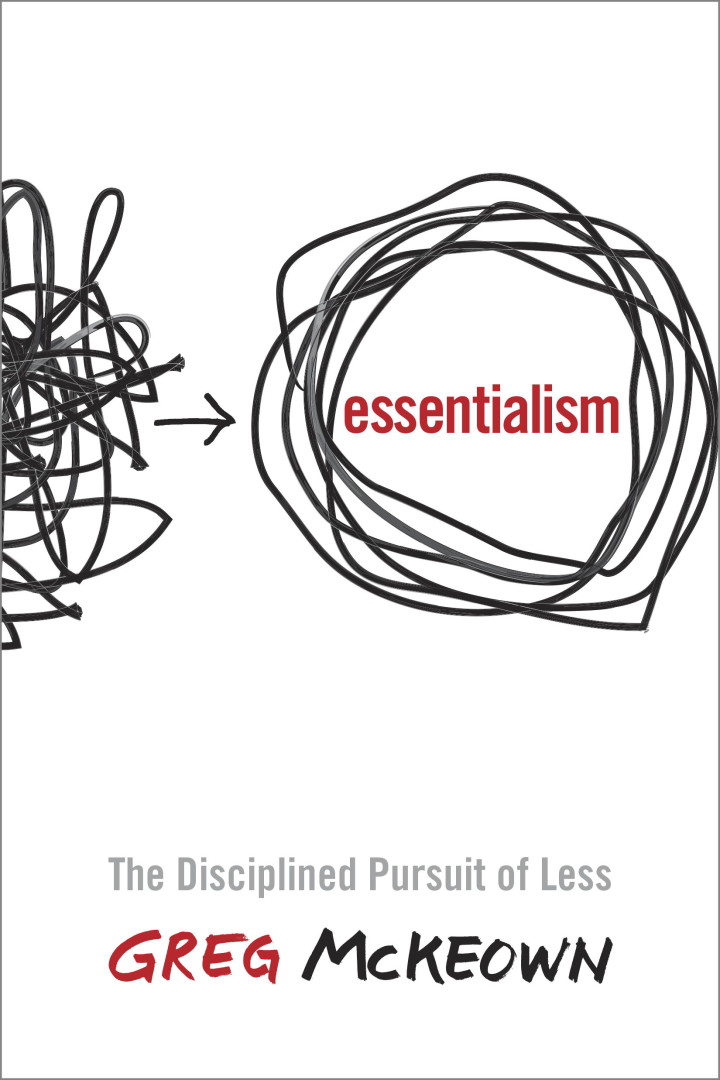
Since I’ve begun writing about and training others in lean communication, I tend to see more and more around me through a lean lens, which is why Essentialism by Greg McKeown is a book that has gripped my attention so tightly. McKeown does not mention lean in his book, but it’s exactly the same philosophy: figure out what’s important and then cut out everything that does not directly contribute to that. That’s why Essentialism is not like most how-to books that tell you how to get more things done; it’s about how to get more important things done better.

One of its key tenets is the application of the design philosophy of Dieter Rams: less but better. It’s an apt term because pursuing essentialism is about living by design, not default. That word design is key, because, according to Mihaly Csikszentmihalyi, author of Finding Flow, everything we do in life we do for one of three reasons: we want to, we have to, or we have nothing better to do—and we spend about a third of our time in each. To put it in design terms, we design the first third, someone else designs the second for us, and the rest is simply default.

That last third is completely under our control, but it takes vigilance and discipline. The second third is also much more under our control than we might think, although it takes courage to tell others no. But we don’t have to go to every meeting, reply to every email, or agree to every task that’s handed to us. By saying no, you may disappoint others initially, but they will respect you more, and you will have more room to focus on what’s essential to yourself or your higher purpose.

It matters for two reasons. First, people feel best when they are doing the things they want to do, which is no surprise. What is surprising is that doing things because you have to, actually makes you feel better than doing things because you have nothing better to do. So, taking control of your actions will make you better off right now. Second, if you are disciplined in choosing important work that contributes to your own or others’ well-being, you—and they—will be better off in the future as well.

The best test of any book is not what you learn, but what you do differently as a result. You many not learn any deep secrets that you don’t already know in some form or another from reading Essentialism, but McKeown has a way of making you look at familiar ideas in a completely fresh way that stops you in your tracks and makes you think. I’m sure everyone who reads it will connect with something different, but for me it was a simple but powerful question: “What’s Important Now?”

For me, just asking that question every time I find myself drifting into the “nothing better to do” mode, or decide whether to agree to someone’s request, goes a long way to changing the proportions of activity—and the results that come from that.

So if you want to take lean thinking beyond lean communication and apply it to your life, it’s essential that you read this book.

Read More
Uncategorized

Thank God for Tough Competitors

Recently, I had the privilege of working with the global sales team of a large manufacturing company based in California. They are in a very competitive industry that is dominated by a tough, savvy Goliath, and they have to scrap and scrape every single day for every single fraction of a point of market share. Their CEO kicked off the meeting with a phrase that resonated with me and led to the idea for this post. He said, “Every morning when I wake up I thank God for ____. They force us to become better and better in almost every way.”

Competition has a way of doing that to people. Having a tough competitor reminds you every day that you have to give your best or you will lose. It also makes you realize that when you have done your best and prevailed, that tomorrow your best will not be good enough. Competition is what fuels your motivation to step out of your comfort zone and push your perceived limits. Competitors keep you hungry by constantly striving to take the food off your table, and they supply just the right amount of fear that keeps your edge and drives your growth.

Deliberate practice, which is the only way to achieve mastery of any field, requires an expert coach who can quickly spot what you need to improve, get you out of your comfort zone, and supply immediate meaningful feedback on your performance. In this sense, a tough competitor can be your most effective coach.

Every area of life contains examples of competitive rivalries that made the participants greater: Ali and Frazier, Jobs and Gates, Adams and Jefferson. Who knows if each of those would have achieved the same heights if they did not have the other constantly pushing them harder and harder?

As salespeople—and just plain humans—we prefer for things to go as easily and smoothly as possible. We like it when our competitors aren’t too tough and our customers are not too demanding. When that happens, it’s easy to settle into cruise control and take life easy. Unexpected challenges are viewed as problems to be overcome so that we can get back to our comfortable lives. But that’s a sign of a fixed mindset that mires us in mediocrity.

When we have a growth mindset that views challenges as feedback that clarifies the path to improvement, there are very few limits to what we can achieve. How do you know when you truly have a growth mindset? When you thank God every day for your toughest competitors.

Read More
Uncategorized

Lean Communication for Sales: Pull

Any salesperson has had this experience: a prospect or existing customer ignores your efforts to engage for months, and then suddenly one morning you get a call or an email when they need something right away. In an instant, you go from a total nonentity to the most important person in your prospect’s life. Or maybe you’re giving a presentation about your product, when suddenly an audience member perks up and says “tell me more about that,” and what you thought was a minor detail might be the missing piece to the big sale.

These familiar experiences underscore the importance of the pull principle in lean communication for sales. In lean thinking, pull is the idea that the customer dictates the rate at which the product is produced and delivered. You need it in selling as well, because no matter how well prepared you are, you will never know exactly how the customer is going to react.

Using pull in selling is about three things: timing, credibility, and responsive listening.

Timing. In lean thinking, pull means that the customer dictates the rate and timing of production, and the goal is to produce only what the customer needs when they need it. Transferring that idea to communication, it means that you provide just the right information the listener needs when they need it. Of course, to make this work, you have to be extremely responsive. When they want their questions answered, they want them answered right away. As Andy Paul says, responsiveness = information + speed.

Extending that idea to sales conversations, it means that you don’t “sell” until the customer is ready to buy. For example, if you lead with a description of your product and the benefits it brings, the customer may not be ready yet to hear that. What Churchill said about learning, “I am always ready to learn, although I do not always like being taught” applies equally to buying. Most people don’t like to be sold, but they do like to buy. That’s another way of saying that they like to be in control of the rate of information they receive which helps them arrive at a decision. Give the customer the sense of control that will make them comfortable with their decision by using pull. Don’t “Always Be Closing”, but always be ready to close.

Credibility. Pull is not simply about passively responding to your customer’s questions or requests for information. You can use pull in the other direction as well, by asking questions to gently pull the customer’s thoughts in certain directions. Who does your customer find to be the most credible person in the world? Themselves. Whose opinion does the customer trust above all others? Their own. How do you get them to express that opinion? By asking questions.

That means that if you can get them to tell you the story you want them to hear, they will believe it because they told it. For example, if they acknowledge they have a problem but don’t seem to recognize the impact that problem has on their business, you have a perfect right—even an obligation—to ask questions to focus on the costs. In fact, questions can be more lean that direct statements. If you tell them directly about the consequences and they accept your statement, of course that is extremely efficient. But more often than not, you tell them about the consequences and they don’t believe you, or they push back, or they ask for clarification, or they agree superficially but don’t stick to their agreement later when they’ve had a chance to think about it, in which case it can become very inefficient. But ask someone a question, watch the lightbulb come on in their mind as they ponder the answer, and you not only get the effect you want faster, but it’s stickier.

Responsive listening. Just being a good listener is not enough. You can be the best listener in the room but it won’t do you any good unless the customer realizes it. In other words, your listening has to be real, and it has to be perceived by the customer as real. That means that in addition to listening closely to what the customer is saying and not saying, you also have to indicate physically that you are paying attention, reflect what you’re hearing and probe when appropriate.

But more importantly, you have to respond meaningfully, which in lean communication means that you actually do something with what you’ve heard. Responsive listening is about sharing the second conversation that is going on inside your head, so that they know they are being heard and their words are having an effect on your thinking. For example, if the customer mentions a concern, don’t simply use that as a cue to deploy your objection-handling algorithm; tell them how you will handle the issue or how you will accommodate that need. When they know their words are having an effect, they will likely open up even more.

Lean Communication for Sales: Talk Less, Sell More?

Lean Communication for Sales: Value

Lean Communication for Sales: Top-Down Communication

Lean Communication for Sales: Reducing Waste

Lean Communication for Sales: Clarity

Read More
1 56 57 58 59 60 197