
Practical Eloquence Blog

Sales Books

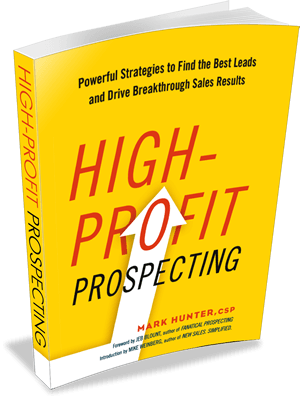
High-Profit Prospecting

Do we need another book on prospecting? As a seasoned (i.e. old) sales professional, I have to admit that’s what I thought when Mark Hunter asked me to review his book, High-Profit Prospecting. But then, I reflected on the prospecting examples that I receive every day as a small business owner, and I realized the sales world is desperately in need of his advice.

Most prospecting books are like diet books: everyone knows generally what’s in them, but they buy new ones anyway because the ones they’ve already read “don’t work”, and maybe this time it will be different—maybe this one will have a new wrinkle or a different approach that will truly work. High-Profit Prospecting passes this test.

The first section of the book, “Basic Truths about Prospecting”, is solid but not particularly different. Hunter counters the myth that social media and the Internet have made prospecting obsolete, and then goes on to anticipate and answer the most common excuses that salespeople use to explain their failure to prospect. If you are already convinced that you need to do more of it and do it better, the first part of the book is preaching to the choir.

While you might be tempted to skip right to the section on tips and techniques, you should definitely make a sincere effort to answer the comprehensive lists of strategic and tactical questions about your process in Part II, “Preparing for Prospecting Success”. Doing so will put you in a much better position to succeed.

Of course, in the end, it still comes down to execution and consistency, and Part III is where the book picks up and delivers valuable insights as well as practical and powerful tips. The overall approach is strong, and Mark’s advice about preparing, organizing and executing a prospecting plan will definitely help salespeople who are at the beginner to intermediate level. But even if you’re advanced (or just old), you can learn a lot from the gems of advice offered throughout the book, because small details can make a big difference in prospecting, where you’re dealing with first impressions. Some examples:

  • Write emails on you smartphone because that’s how most recipients will read them.
  • Call when most people don’t. (This one worked on me recently, because the caller earned my respect by calling on a Friday afternoon.)
  • Call busy executives the first two minutes just before and after the top of the hour, when they are between meetings.
  • When speaking to the gatekeeper, ask for 20 minutes of the executive’s time. Any shorter will make it seem like your offer is unimportant, and a half hour is too long.
  • Eleven rules for leaving a great voice mail should be required reading for every sales professional.

I highly recommend High-Profit Prospecting to any salesperson at any experience level—particularly to anyone who plans on calling on me!

Read More
Sales

When Sales Cultures Go Bad

Wells Fargo Bank has given sales culture a bad name.

As someone who believes in the worth of the sales profession and strives to promote professional sales practices, I’m outraged and saddened by the actions of Wells Fargo Bank. They have tolerated, encouraged and incentivized a culture of outright fraud, and I believe responsibility extends to the highest levels.

I also have a personal connection to the banking industry: I was a commercial banker for ten years before getting into training. I was in lending, and our unique challenge was that we first had to sell the product, and then immediately begin trying to get it back! Back then, there was always tension between sales and sound banking practices. When business slowed down, we were urged to go out and find more businesses to lend money to, and the strictness of our underwriting seemed to be inversely correlated to where we were relative to quota.

But we had checks and balances, and I never saw an instance where ethical lines were crossed just to make a sale. In fact, we found that if we did a better job at selling, we had full pipelines and we could afford to be more choosy. That’s how a good sales culture works.

CEO John Stumpf’s response reminds me of the line from Casablanca: “I am shocked- shocked– to find that gambling is going on in here!” They act like they did not know what was going on, but when at least 5,300 employees were involved over five years, don’t you think anyone would notice? When accounts are systematically opened and then immediately closed after the person received quota credit, when many of the email addresses of the “account holders” used the wellsfargo.com domain name, don’t you think anyone would notice? When the person who ran the program is punished by receiving $124.6 million as she leaves, don’t you think responsibility applies to the highest levels? (And it’s not as if they’re actually taking responsibility for their actions, as this analysis shows)

Bad sales cultures don’t just happen—not to this extent and for this length of time. When a sales culture goes this wrong, there has to be responsibility and repercussions all the way up to the CEO. As the old saying goes, the fish stinks from the head first.

Read More
Book reviews - Sales Books

Where the Ground Truth Lives

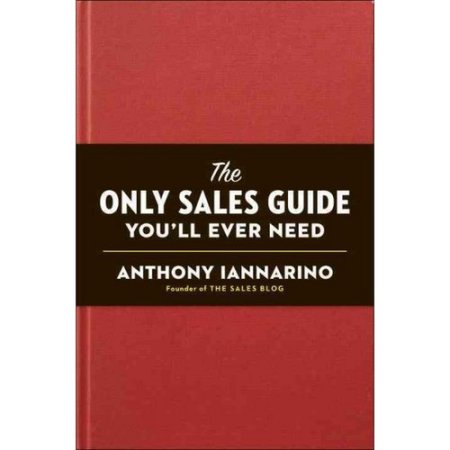
Anthony Iannarino’s career has combined the best traits of a salesperson, teacher and writer, so it’s no wonder that his first book, The Only Sales Guide You’ll Ever Need, can be read by all for both pleasure and profit.

I say “all” because the advice contained in this book can help you whether you are just starting in sales or have more years of sales experience than you care to count. Beginners can benefit by adopting the right mindsets early and by honing their skills over time, while old dogs like myself get a much-needed reminder and kick in the pants to get back to things we thought we knew.

The first half of the book focuses on mind-set, or the beliefs and behaviors that characterize successful salespeople. Anthony addresses ten of these mind-sets, including self-discipline, caring, persistence and accountability. One might argue whether some of the mind-sets, such as optimism and caring, are inborn traits that are very difficult to change, but even there Anthony goes beyond telling you they’re important—he provides checklists and advice for developing them if you’re falling short.

The second half of the book is all about skill sets, and these are definitely areas where even those of us with a lot of experience can find room for improvement. From closing to prospecting (yes, you read that right: for Anthony, closing comes before prospecting—but you will have to get his book to find out why), to negotiating and business acumen, the skills you need to succeed at complex B2B sales are here. As you read each chapter, it’s clear that Anthony’s ideas are based on real—and most likely painful—experience. For example, he cautions against the commonly dispensed advice to call as high in the organization as possible. He reminds us that “You may be presenting to the C suite, but I promise that you will be executing further down the organizational chart, where the ground truth lives.”

I love that phrase: the ground truth. That’s exactly what Anthony tells the reader in every page.

As an author of three sales books[1] myself, I could easily quibble with the title of Anthony’s book, because there are a few areas about sales that Anthony does not write about in his book. But then I’m reminded of what happened to Winston Churchill. As a boy he was held back from the smarter boys in his class and made to focus exclusively on English—and we know how that turned out. He wrote:

Naturally I am biased in favour of boys learning English. I would make them all learn English: and then I would let the clever ones learn Latin as an honour, and Greek as a treat. But the only thing I would whip them for is not knowing English. I would whip them hard for that.”

This book is like learning English. It’s packed with exactly the right lessons that you need to succeed in sales. In that sense it is the only guide you would ever need. If one of my kids were going into sales—this is the first book I would have them read. They could always read mine later—as a treat!

[1] Full disclosure: Anthony proved me an advance copy and also includes my book Bottom-Line Selling in his recommended reading list at the end of Chapter 16.

Read More
Lean Communication - Sales - Uncategorized

Lean Communication for Sales

Would your prospects and customers pay to talk to you?

The only way that’s likely to happen is if they know you will bring them useful ideas to improve their business outcomes without wasting their time!

One of the recurring memes in the B2B sales world is the idea that salespeople are an endangered species, because buyers have so many alternative sources that they can tap to get the information they need to make an effective purchase decision. And with all the other demands on their time, it’s no wonder that buyers put off talking to salespeople for as long as they can.

When quantity is unlimited, quality counts more than ever. Precisely because there is so much information available and so many voices clamoring for the attention of your dream buyer, they will welcome a trusted voice who will give them just what they need when they need it without wasting their precious time.

My new e-book, Lean Communication for Sales, will help you to become that trusted voice, by showing how to communicate more value in fewer words—and become a valuable asset to your customers. As a B2B sales professional, your role is to deliver the information buyers need to make the best possible decision.

Lean Communication for Sales will help you communicate higher value with less waste by applying the principles of lean thinking to your sales communication process. You will be able to apply 9 powerful ideas as simply as ABCD:

  1. Add value: Leave your customers better off by Answering the Question that is on every buyer’s mind, and using Outside-in Thinking to communicate what they value the most.
  2. Brevity: Save time and boost credibility by putting your Bottom Line Up Front, and use the So What filter to eliminate clutter.
  3. Clarity: Ensure that your message is heard, understood, and remembered through Transparent Structure, Candor, and User-friendly Language.
  4. Dialogue: Co-create value with your buyer through effective dialogue, using Just-in-time Communication and Lean Listening.

Talk less, sell more: improve the quality of your customer conversations with Lean Communication for Sales!

Read More
1 54 55 56 57 58 197