One of the turning points in US political history took place in Nashua NH in 1980, at a debate in the Republican presidential primary. Ronald Reagan had entered the primaries as the favorite, but he had been upset in Iowa and Puerto Rico by George H.W. Bush, who seemed to have the “big Mo”. The local newspaper, the Nashua Telegraph, had invited the two to debate, but a question came up whether that would violate campaign finance laws.
To avoid the problem, the Reagan campaign paid for the debate, and then invited the other four candidates. This created a controversy when Bush threatened to pull out of the debate, and when Reagan began to explain his position, the editor, John Breen, began arguing with him. When Reagan insisted on continuing, Breen called for the microphone to be turned off.
To this day, it’s still a beautiful thing to watch, as Reagan got extremely angry and snapped, “I am paying for this microphone, Mr. Breen!” He then turned and glared at Breen as the crowd jumped to its feet and cheered. Even his opponents clapped, in effect publicly bowing to his leadership.
That was a leadership moment for Reagan that day, as the crowd, and the nation, responded to the physical display of dominance and strength. But just as important was the fact that his strength was seen as justified, which would not have been the case if he had not paid for the microphone. That simple fact gave Reagan the moral high ground, and he was able to take advantage of it.
I’m not advocating that you act the same way in a high stakes sales presentation, but you should have the same attitude going in. If you are nervous about speaking, or intimidated by the rank of the audience, keep in mind that you paid for that microphone.
You paid for it by doing all the hard and difficult work in the sales process that led up to that moment. You paid for it by researching your client’s needs, putting together the ideal solution and by thoroughly preparing for that presentation. You paid for that microphone.
Nick Morgan has written two very good books on presentations and persuasive communications[1], so I looked forward to reading his new book, Power Cues: The Subtle Science of Leading Groups, Persuading Others, and Maximizing Your Personal Impact. For the most part, I was not disappointed. The book contains a lot of solid material which can definitely help anyone who wants to strengthen their skills and boost their personal influence.
Everyone can get something different out of this book, depending on their baseline level of knowledge of nonverbal communication. Without false modesty, I can say that I have read dozens of books and hundreds of articles on the topic, including almost all of his principal sources. But I also learned a lot, because Morgan supplements the research by incorporating it into his own system based on his long experience. It’s obvious that he knows what he’s talking about and what he’s doing.
The theme of the book is that your unconscious mind is hugely influential in your perceptions and decisions, and you can become a better communicator by gaining control over your own cues and becoming more skilled at reading others.
There are seven power cues, each covered in its own chapter. I personally found the first two the most useful: becoming self-aware of how you present yourself to others and then taking charge of your nonverbal communication. One excellent point is that “charisma is focused emotion”, but because it’s almost impossible to focus on your material and your own body language at the same time, you need to put yourself into the right state of mind before that important meeting or big presentation, and the book describes techniques that method actors use before they go on stage.
The third chapter concerns reading the signals of others. Morgan pays lip service to Paul Ekman’s work on micro-expressions, but then sensibly tells us that it’s too complicated to use in normal situations. Morgan’s key insight is that we are already experts in reading nonverbal cues, but we don’t always know how to tap into that knowledge. His approach is to teach you how to listen to your unconscious mind by asking yourself four fundamental questions: Is this person: friend or foe? Telling the truth? On my side? Powerful or not?
After the first three chapters, the book became less useful to me, but that may just be a personal reaction. Chapter four concerns the proper use of your voice. It’s no great revelation that deeper voices are perceived as more powerful, but there is not too much that you can do about it. You can work on your breathing, or you can use a piano to find your “maximum resonance point” (and I have to admit I got totally lost on that one).
Chapter 5 goes deeper into the combination of body language and voice, using the framework from the book, Honest Signals, by Sandy Pentland. I find some of the suggestions a bit gimmicky, especially the idea of trying to manipulate others by mirroring their movements, but there are some good ideas in here.
Chapter 6 made me scratch my head a bit, trying to figure out how it fits in with the rest of the book. It’s about using self-affirmation to harness the power of your unconscious mind.
Chapter 7 is about using stories to really connect with your audiences. This chapter is very practical, with excellent suggestions on how to structure and tell stories. It’s a nice strong finish to the book.
Will this book make you a better communicator? Maybe – it depends on you. I have two caveats. The first is one that Morgan himself issues in the book: these are subtle and difficult skills that require practice to master. You can’t become an instant expert just by reading about a new technique, any more than you can shoot a basketball better because you watched Lebron James on TV last night. Second, you always have to keep in mind that cues don’t trump content in the long run. In fact, if you have strong content backed by solid evidence, you will probably radiate these cues naturally.
Despite my reservations, I still give the book five stars because I believe that regardless of where you start from, there are plenty of practical ideas in this book to make you a more persuasive communicator. Read it, choose the ideas that you think will work for you, and then practice, practice, practice!
[1] Give Your Speech, Change the World: How to Move Your Audience to Action, and Trust Me: Four Steps to Authenticity and Charisma
Come on, did you really think I would have a typo in my title?
People love to focus on high-level strategies for improving their lives, when often what they really need is a startegy. These are the people who are so fond of making plans, setting goals, conducting SWOT analyses, that they never get around to actually start anything.
I’m all for planning and goal setting, but so many times what we need is not more detail or greater sophistication, it’s more action.
As George Patton said, “A good plan violently executed now is better than a perfect plan executed next week.” You can’t always foresee the full road ahead, so you have to begin with that first step, which at least lets you see one step further ahead than you could before you started.
I have to confess that I’m writing this post for myself as much as for anyone else, because I often run into the problem when I have an idea for an article. I love to research, jot down key points, maybe even draw up an outline of what I want to say – and then there it sits. Nothing really happens until I start.
It’s especially helpful when you dread the task. When I was on the swim team, I always hated that first dive into cold water to begin practice, but then it was OK after that. At least back then I had a coach to “encourage” me to make the dive. Nowadays cold calling has replaced the cold pool, and I don’t have a coach supplying “encouragement”. At some point we all have to become our own coaches, and then it’s up to us to start.
It’s also helpful when you lack confidence that you can complete the task. Of course, the only sure way to know that you can’t do the task is not to start. That way, at least, you can preserve your fragile ego by telling yourself that you could have, if you only wanted to. Force yourself to start something risky, and you’ll be so busy making sure you get it right that you won’t have time to feel nervous.
What are some good startegies?
Start small. If you think of everything you need to get the job done, you can easily get intimidated. Need to start an exercise program? Go for a two minute walk; look up local gyms; buy some shoes—just start with something small. Or buy Robert Maurer’s book on personal kaizen: One Small Step Can Change Your Life: The Kaizen Way.
Use implementation intentions. Tell yourself, or better yet, write down, in specific detail what you will do and when. Heidi Grant Halvorson calls it, if-then planning: “If it is 2 p.m., then I will stop what I’m doing and start work on the report Bob asked for.”
Get some help. Enlist a friend or colleague to remind (nag) you. If you really want to make it interesting, make a bet with them that you will start by a certain time.
Use the Nothing Alternative. Since I learned about this one, it has had a tremendous impact on my writing discipline. Simply set aside time for the activity in your schedule, and even if you don’t feel the urge to start, it’s OK. You just can’t do anything else during that time.
Last week I coached a client based on a video of him in a press conference. I told him that a gesture he used, with his palm down and fingers outspread, showed a lot of confidence and authority. That was my impression, but, because I like to supplement my own experience with what the experts say, I did some more research on how hands can affect how confident you appear to others.
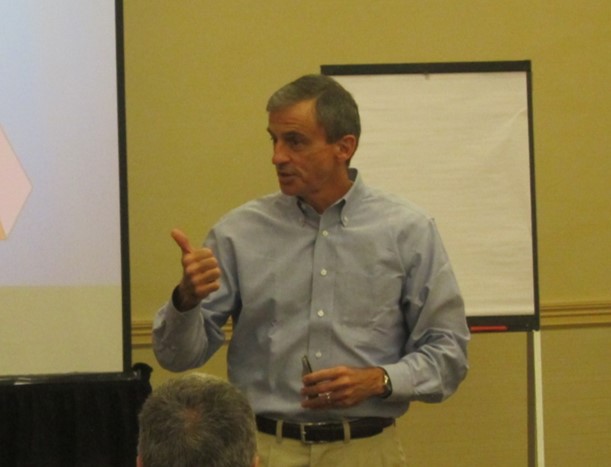
Coincidentally, I ran a class last week in which someone took some photos of me speaking to the group, and when I went back and viewed those, armed with my formal knowledge, I found a few that will apply to this article.
Navarro tells us that “…we have evolved to keep a close eye on the highly mobile hands.” This makes tremendous sense from an evolutionary perspective. Our ancestors survived by developing the ability to quickly size up whether another person is a threat, and their hands are their primary weapons. So, when we see and hear a speaker, we unconsciously and rapidly reach conclusions about their potential power, and hence their confidence.
We are all have a pretty good unconscious competence at reading others, but the fact that the knowledge is unconscious means that speakers may not know that they are betraying a lack of confidence through their hands. Once you have a conscious understanding, you can practice and develop your own confident hand gestures.
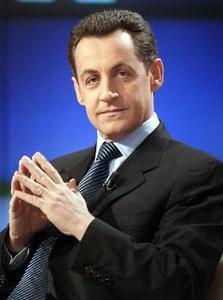
Hand-steepling is probably the most powerful:
Women who use hand-steepling tend to keep their hands lower. In general, the higher the hands, the more confident you appear.
A version of steepling is the “basketball”, where you hold your hands as if you’re holding an invisible basketball: (although I think Newt is holding a beach ball in this picture)
Holding your hands open with palms down indicates that you know what you’re talking about:
Thumb displays also indicate confidence:
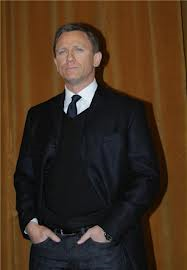
Incidentally, keeping your hands in your pockets makes you seem unsure of yourself, unless your thumbs show:
Hands can also show a lack of confidence
Fingers interlaced:
Wringing hands or rubbing palms together:
The infamous and ubiquitous fig leaf:
Nervous touching of yourself, especially covering your neck:
You need to practice
If you want to work on having more confident hands, the first step is to videotape yourself so that you can become aware of your habits. Next, if you want to start using gestures that are new to you, it’s absolutely critical to practice them so that they become second nature. Natural gestures actually begin before the words come out, so that if you try to consciously use any of these gestures, they are going to come out wrong. Your listeners won’t know exactly why, but they will notice that you look awkward for some reason.
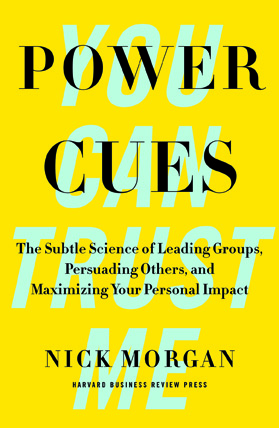
 . For the most part, I was not disappointed. The book contains a lot of solid material which can definitely help anyone who wants to strengthen their skills and boost their personal influence.
 .
. , and
, and  . A lot of what you will read here is taken from his books, and the rest from my own experience and reading through the years.