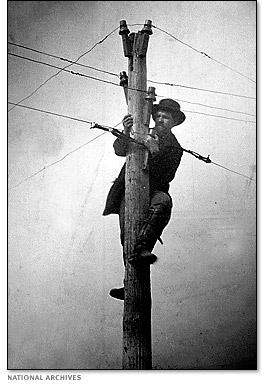
If they cut the lines, will your message get through?
Brevity is a communication virtue because it increases the chance of your message being heard and understood. The best way to be brief is to state your point up front and then add detail as necessary.
In this increasingly distracted world, people just won’t take the time to listen for very long to what you have to say, so it’s important to get your message across succinctly and efficiently. Make sure that if they tune out, they have at least heard the main point.
Think about a newspaper article. The headline tells you the main point, so that if you’re too busy to read the article, at least you have a general idea of what happened. Next, you read the first paragraph, which tells you the “who, what, where, when, how and why”. Journalists call this the inverted pyramid technique, in which the critical information is at the top of the pyramid and the least significant details at the bottom.[1]
Besides ensuring that your main point will be heard, brevity will make it easier to understand. The mental discipline that you go through to figure out your main point can only help to clarify your message. This is why busy leaders like Churchill and Reagan insisted that any issues presented to them had to be contained on one sheet of paper. Think about it: Should we invade France in 1943 or 1944? Negotiate with this fellow Gorbachev? One sheet of paper.
[1] In my classes, I’ve often told the story that the inverted pyramid was invented by America journalists during the Civil War who feared the lines could be cut at any time. Sadly, in researching this article I have just discovered it’s a myth. I say sadly, because it’s a good story and it allows me to compare your listener’s attention to telegraph wires that can be cut at any time.
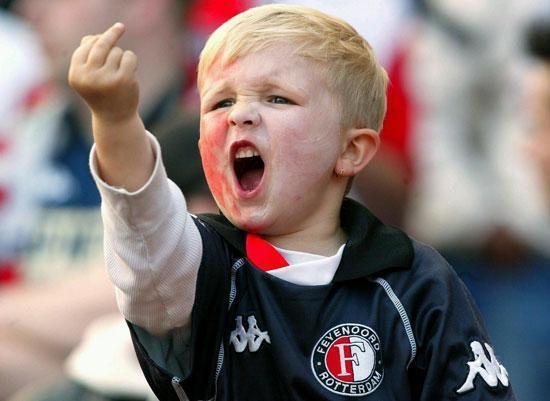
Too much passion can damage your credibility
A common theme among most presentation books and blogs is the importance of having and displaying passion for your topic. We’re told that passion excites and engages audiences and furnishes you with the fire to be strong and credible. And they’re mostly right: when you’re trying to instill a vision, motivate your listeners or inspire them to act on their beliefs, your passion may be the crucial ingredient that makes the difference.
But everything good comes with a cost, and too much passion can damage your credibility and effectiveness, especially for certain types of business presentations, for example when you’re trying to get a proposal approved internally, or selling a complex business solution to a key customer.
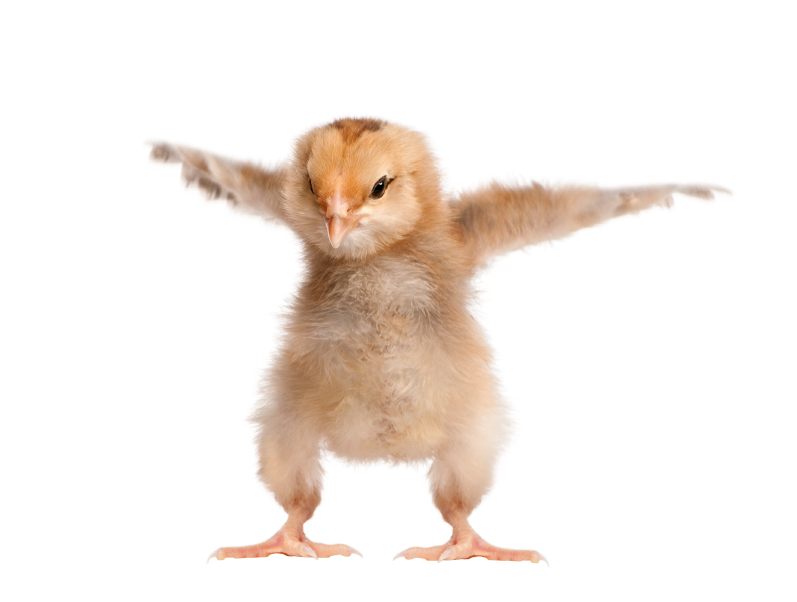
So, you think you’re better than me…
The human drive for status is so strong within all of us that any practical persuader ignores it at their peril.
As a kid, I grew up on a chicken farm, and got to observe first-hand what a real pecking order looks like. Whenever we got a batch of baby chicks, we would have to use a debeaking machine to cut off the sharp pointy end of their beaks, which sounds cruel but actually saved a lot of lives. Each chicken coop contained a couple thousand chickens, and they had rigidly defined status levels that only chickens recognize. Within those orders, it’s good to be at or near the top, and miserable or potentially fatal to those near the bottom, because higher status chickens would peck at those below. By blunting their beaks we gave the bottom chickens a chance to survive and preserve our feathered investment.
If you’re a chicken, low status can kill you. People are a lot like chickens in this regard.

The heart has its reasons of which reason knows nothing. Pascal
I generally try to post new articles on Tuesdays and Thursdays, but as of last night I had no clue what I was going to write about today. That quandary was resolved when I woke up about 5:30 after a series of very vivid dreams with a clear idea for today’s topic, in fact for a series of topics. My dream actually involved sharks, and my reluctance to dive into murky water to retrieve something I had lost because I suspected they were waiting to snack on my bony body.
I think the reason I woke up convinced that it was time to write about pathos is that the dream reminded me how reluctant we sometimes can be to dive beneath the surface of logic and explore the sometimes dangerous passions, feelings and sentiments that lurk below.