
Who’s the decision maker?
I bet you never thought you would learn about one-celled organisms in a blog about persuasion, but bear with me for a few paragraphs because I want to make an important point.
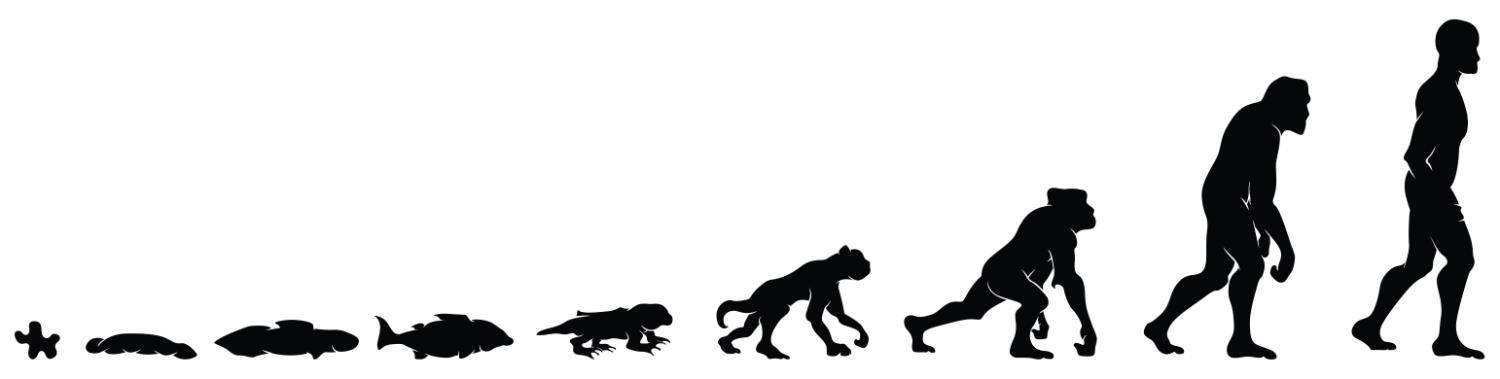
It’s been quite the fashion over the past few years in sales and persuasion circles to focus on our three brains: the reptilian brain, the rat brain, and the human brain. The idea is pretty simple: our human brains have evolved over eons in a different environment than our modern world; since evolution by definition proceeds from what went before, as our newer brain structures and functions evolved, the old structures remain and continue to be quite active. It’s kind of like the separation of powers in the Federal government: all three branches get involved in the process. So, if you want to persuade someone, you have to appeal to the simpler brains as well as to our logical faculties.
That may be true, but why stop at the reptile brain? If we trace our ancestry even further, we all evolved from one-celled organisms—amoebas, if you will, and we were amoebas even longer than we were reptiles. So, should we also tailor our persuasive efforts to the amoeba brain that surely lurks within all of us?
I can see it now: make sure you have a lot of light when you make your presentations, because amoebas move toward the light. You wouldn’t have to explain your solution, because people can get it by osmosis. We could call it “celling”. I realize I’ve reached the point of absurdity, but unfortunately so have many of the “scientific” persuasion experts.
The basic idea is sound, as long as it’s not carried too far. Aristotle, the father of modern persuasion science, made it the core of his Rhetoric, acknowledging that persuasive appeals comprise three strands, ethos, pathos, and logos. More recently, research has categorized and measured myriad ways in which our decisions and behaviors deviate from the purely rational. Science has learned a lot about the brain in the past few decades, and technologies such as functional MRIs let them see real time into our brain activity as we make decisions, respond to stimuli, etc. A lot of that research has confirmed, refined, or changed our understanding of how our minds work.
But new scientific discoveries are inevitably seized upon immediately by modern-day snake oil salesmen to add some legitimacy to their half-baked ideas. The ink was barely dry on the first edition of Darwin’s Origin of Species when the Social Darwinists hijacked his theories to justify their own notions of how society should be organized. In the same spirit, a lot of experts have picked up on the colorful pictures showing various areas of the brain lighting up during controlled laboratory experiments to market their services to companies, promising that they can read consumers’ brains and know what makes them tick, even better than the consumers themselves can. (By the way, if you’ve ever been inside of one of those machines, you know just how “natural” that situation is.)
When a book applies the idea to B2B sales, telling us that, “In spite of our modern ability to analyze and rationalize complex scenarios and situations, the old brain will regularly override all aspects of this analysis and, quite simply, veto the new brain’s conclusions.”[1], then the idea has gone too far.
I have a lot of respect for the work of one of the deans of persuasion science, Robert Cialdini, but even he goes a little too far. His six principles for influence are implied to be so powerful that you can’t sell a good idea without them, and you can definitely sell bad ideas with them. You can trigger fixed-action patterns that cause people to act like a mother turkey does when she hears “cheep-cheep”, and that’s what his book is about.[2] Cialdini at least acknowledges the importance of rationality—in a footnote—saying of course material self-interest is important, but that it goes without saying.
Yet, that’s the problem: it doesn’t go without saying. When a Harvard Business School professor tells us that “what you say is less important than how you say it”, and “style trumps content”, then it has to be said.
Content has to come first
This article is a plea for a little more, well, rationality in the understanding of what it takes to get ideas approved and products sold. Of course it’s important to be able to appeal to more than just the rational parts of the brains of your persuasive target. I’ve written about ways to do that many times on this blog. But it has to start with a sound, logical and defensible business or personal case—with what Cialdini called material self-interest.
One of the oldest sayings in sales is that you should sell the sizzle, not the steak. But what happens when they buy the appetizing sizzle and then find out the steak is crappy? They won’t come back. That’s why you have to make absolutely you have an excellent steak before you worry about the sizzle. Regardless of how many persuasive cues you employ, or which regions of the brain turn which color in the fmri, if the idea does not work, you soon won’t, either. Bad ideas are bad ideas, no matter how they’re dressed up.
One problem with fixation on techniques to appeal to the old brain is that they distract from the main job of putting together a strong proposal. There are people who spend most of their time learning “the tricks of the trade” in the hope of finding shortcuts, when they should be learning the trade itself. I’ve seen people put more time in the choice of fonts for their slides than they do in critically examining the strength of their ideas.
Whether you’re trying to get a proposal approved internally or selling a solution to a customer, most business decisions are complex enough to require extensive data, deep analysis, and careful decisions. That’s the reality of our modern world, which was built by the human brain. Never forget that it’s still the most important decision maker.
[1] Patrick Renvoise and Cristophe Morin, Neuromarketing, viii.
[2] Robert B. Cialdini, Influence: Science and Practice.

It’s not magic
We all admire and envy those individuals that have it: the ability to walk into a room and captivate the attention of everyone. Imagine how much easier your life and your work would be if you had that natural quality. Everyone would want to be around you, would hang on every word that comes out of your mouth, and would want to do what you want.
In The Charisma Myth, Olivia Fox Cabane makes a convincing argument that you can have that ability, because charisma is the product of a certain mindset and behaviors that are trainable. In short, if you read this book, and practice and apply its techniques, you too can be the lightbulb instead of one of the moths.
When you come across a book like this, you may be reminded of the old ads in comic books when you were a kid, that promised to turn you from a 98-pound weakling into a musclebound stud who ruled the beach and got all the girls. The reality is that you can make the change—just don’t expect it to happen overnight or without a lot of hard work. You have to work at the exercises even when they get hard.

Follow these steps and you won’t have to dance
I’ve written a lot about planning and preparation, but there is also tremendous value in having the skill and poise to rise to the occasion when someone springs an unexpected question on you or asks you to say a few words on a particular topic. Having survived (so far) 21 years in front of trainees, I’ve developed a few habits that have served me well.
Plan for the unexpected. This sounds like an oxymoron; how can you prepare for an impromptu talk? If you’re going to a meeting, think about who will be there, and based on your knowledge of their history, their positions and their stake in the topic, what might they ask? To be really sure, don’t limit yourself to the scheduled topic. You might be there to discuss a particular project, but someone might have an interest in one of your other projects as well.
Practice situational awareness. Have you ever had the feeling of looking up and seeing all eyes turned on you? It’s easy to tune out or check your email momentarily when someone else is speaking on a topic that doesn’t immediately concern you—and that’s when Murphy’s Law guarantees that someone will direct a question to you. There’s nothing more credibility-crushing than having to ask someone to repeat the question.

Even your handshake will make a difference
There’s a scene in the movie Moneyball that wonderfully captures one of the most important hidden influences that affects our judgment and decision-making. The Oakland As manager, Billy Beane, is presiding at a meeting in which his scouts are discussing prospects they like. The discussion is heavy on references to looks, such as “he has a strong jaw”—as if that has any correlation at all to the real question: can he produce runs? Another does not like a prospect because he has an ugly girlfriend; it tells him the player lacks confidence.
This bias is called the halo effect, and it has a powerful influence on the success of your persuasive efforts. The halo effect means that we have a tendency to let a judgment of a particular trait affect our judgment of other unrelated traits. For example, attractive individuals also tend to be perceived by others as more competent or likeable.
Because of the halo effect, we may perceive individuals differently depending on the situation, or may perceive the situation differently depending on the individual. For example, here are descriptions of two executives: