Podcast: Play in new window | Download
On a scale of 1-10, how good are you at spotting when others
are trying to scam you?
If you rated yourself higher than a five, you’d better stay
with me for this entire post. It’s a story of some very smart people—people who
should have known better—who were fooled for a very long time and lost millions
of dollars in the process.
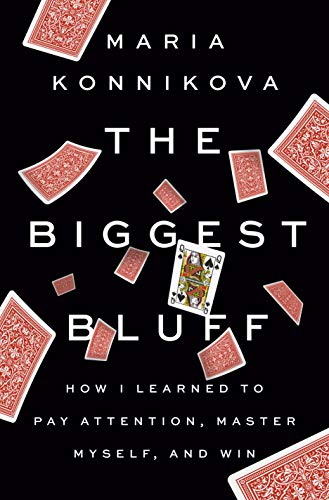
I’m switching sides for at least one episode because I’ve recently become fascinated by how con artists work. I first became interested when I was preparing for my podcast on instant trust, and I read a book called The Confidence Game, by Maria Konnikova, At about the same time, my son recommended that I read Bad Blood: Secrets and Lies in a Silicon Valley Startup, by John Carreyrou. Both books are stark reminders that persuasive communication can be used for evil as well as for good, and it’s helpful to know how people pull off cons that seem unbelievable in retrospect.
Let’s start with Bad
Blood. In a nutshell, the story is this: a company named Theranos started
by an attractive and charismatic 19-year-old Stanford dropout sets out in 2003 to
make a huge dent in the universe of healthcare by developing a revolutionary
technology that makes it possible to perform hundreds of blood tests using a
single drop of blood. It’s a powerful
promise, and it attracts investors from professors, seasoned tech entrepreneurs,
and the likes of former Secretary of State George Shultz, retired General James
Mattis, Henry Kissinger, Rupert Murdoch, and also signs contracts worth
hundreds of millions of dollars with Walgreens and Safeway. The company raked
in over $700 million in capital and was valued at one time at $9 billion,
making its founder Elizabeth Holmes the youngest self-made billionaire in
history.
Holmes may have initially had sincere aspirations to deliver
on her dream, but somewhere along the way it turned into a big, bad, elaborate deception.
It finally got exposed and began crashing down in 2015, when Carreyrou wrote
about it in the Wall Street Journal.
How did a company fool so many sophisticated people for so
long? If people with such smarts and experience can be so easily fooled for so
long, what hope is there for us ordinary mortals? Actually, as I will talk
about, being smart is not necessarily a defense. In fact, being of above
average intelligence may actually be a liability.
I believe any elaborate deception requires active
participation by both sides in the transaction. This is no way implies that
there is anywhere near moral equivalence between someone who deliberately sets
out to deceive and their victims, but the thoughts and behaviors of the victims
are certainly contributing factors. Let’s look at both sides and see how Elizabeth
Holmes was able to pull it off for so long:
- She was extremely charismatic. very intense way
of looking at someone; spoke with great sincerity and conviction
- She looked the part. She fit the story she was
telling, and people had heard the story before: the gifted passionate dropout
who transformed an entire industry, a la Bill Gates and especially Steve Jobs.
In fact, she encouraged the similarity by dressing only in black turtlenecks.
- She was totally ruthless with the truth. Could
easily look someone in the eyes and tell the most outlandish lies.
- She showed no empathy or conscience. She was
willing to do anything to protect her version of the story, from hiring lawyers
to intimidate and harass those who expressed doubts to even putting patients at
risk.
Even smart people
fall into common mental traps
Even the most analytical and careful thinkers take shortcuts
or bend to certain biases, and here are just a few of the factors that Holmes exploited.
Social proof. Even
smart people don’t have time to research the biochemistry of blood analysis, so
they take a shortcut by relying on the words and actins of people they trust.
Halo effect. When
someone exhibits positive outward qualities, such as looking and sounding
professional and competent, it’s much easier to think they’re good at other
things as well, such as being a good manager or scientist.
Confirmation bias. Once
you build an attractive story in your mind, it’s almost guaranteed that you
will ignore evidence that does not fit that narrative, or you will find
convenient explanations.
Fear of Missing Out.
If you’re Walgreen’s and you don’t take the plunge, what happens if CVS does
and makes millions?
Highly intelligent
people may be more vulnerable
Anyone can fall into the mental traps listed above, but
highly intelligent people also have two additional handicaps, which may make
them even more vulnerable.
Ricky Jay, a professional magician, says, “For me, the
ideal audience would be Novel Prize winners…their egos tell them they can’t be
fooled.”
But one Nobel prize winner, Richard Feynman, said, “The
first principle is not to fool yourself. And you’re the easiest person to
fool.” And keep in mind that he was speaking to the 1974 graduating class of CalTech
when he said that.
What makes smart people so easy to fool? First, it goes to
what Ricky Jay said. They know they’re smart, so they think they can’t be fooled.
They don’t actually imagine that the person sitting across from them is smarter
than they are (at least in this particular situation). That means that they
won’t even listen when someone tells them they’re wrong. George Shultz’s own
grandson was one of the first to blow the whistle on what they were doing, and
Shultz sided with Holmes. He actually told his own grandson, “I don’t think
you’re dumb, but I do think you’re wrong.”
Second, smart people are very clever at coming up with
rational explanations for things that don’t look right. No peer reviewed
journals? That’s because it prevents others stealing their advanced ideas. Negative
press? That’s caused by competitors trying to stop them. Missed deliveries?
That’s because of the earthquake in Japan. Those types of explanations are
easier to think of than the simple fact that they may just be wrong.
So, what can you do about it?
- Konnikova says the key to resisting persuasion
is to have “a strong, unshakeable, even, sense of self. Know who you are no
matter what, and hold on to that no matter what.”
- Be objective. There’s a simple hack to help you
distance yourself emotionally from the decision. Pretend that someone you know came
up to you and asked your advice on whether to invest or not.
- Have an exit script. If you start losing money
it can be tempting to throw more in to salvage it. Know what your limits are
before you enter into the transaction and stick to it.
- Be very suspicious of secrecy and time pressure.
- Search for disconfirming information; actively
search for evidence that you may be wrong.
OK, now that
I’ve armed you with the tools, go ahead and listen to the rest of the podcast
and see if you pass the test at the end!