 Maybe you shouldn’t. You’ve got a lot of demands on your attention, so you should get a return from taking a little time out of your life to read what I write. Everyone has different reasons for doing things, but here are a few that might work for you:
If you’re already a leader:
- You are looking for ideas, approaches and techniques to get the best thinking and best efforts out of your subordinates.
- You want to drive real change through your organization, advice and know it won’t happen just because you say so.
- You don’t want to rely on authority alone to get things done.
If you’re not yet in a position of authority:
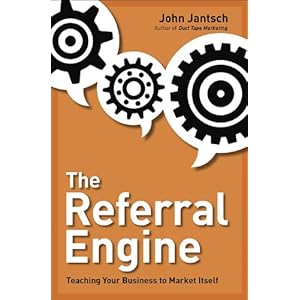
 There are a lot of reasons to recommend a book, but The Referral Engine: Teaching Your Business to Market Itself, by John Jantsch, has given me one of the best: reading it will make you money. It’s my first book recommendation on Practical Eloquence because of what it did for me:
 Brevity is one of the most critical attributes of practical eloquence, because you’re dealing with ever-shrinking attention spans and the discipline of distilling your message to its essence will greatly clarify your thinking.
Here’s one of the best examples of brief eloquence that I’ve come across.
When General Ira Eaker led the first contingents of the 8th Air Force to England in 1942, hopes were running high for America to add its muscle to the war against Nazi Germany. So, when he was asked to speak at a luncheon, the audience was poised to hang on his every word. Here’s his speech, in its entirety:
“We won’t do much talking until we’ve done more fighting. After we’ve gone, we hope you’ll be glad we came.”
He sat down amid thunderous applause.
If you have any other examples of brief but powerful messages, please share them.
Reading annual reports can be a lot like taking an Ambien on a long flight after a few glasses of wine: if it doesn’t put you to sleep it will definitely befuddle you. That’s why it is so refreshing to read Warren Buffett’s yearly letters. His tremendous knack for candidness, plain speaking, vividness and audience focus is refreshing and instructive.
Candidness: Most annual reports, Enron notwithstanding, are not actually dishonest. They don’t lie outright, but they do make it difficult to figure out the truth, especially when that truth reflects unfavorably on the leadership. Buffett’s self-effacing candidness actually increases his credibility.
“And now a painful confession: Last year your chairman closed the book on a very expensive business fiasco entirely of his own making.” (2009)
“During 2008 I did some dumb things in investments. I made at least one major mistake of commission and several lesser ones that also hurt. I will tell you more about these later. Furthermore, I made some errors of omission, sucking my thumb when new facts came in that should have caused me to re-examine my thinking and promptly take action.” (2008)
“Before making this commitment, Bill and Scott again asked for my advice. Initially, I was pretty puffed up about the fact that they were consulting me. But then it dawned on me that the opinion of someone who is always wrong has its own special utility to decision-makers.” (2004)