
Month: December 2016

  • The Power and Perils of Megativity

    The Power and Perils of Megativity

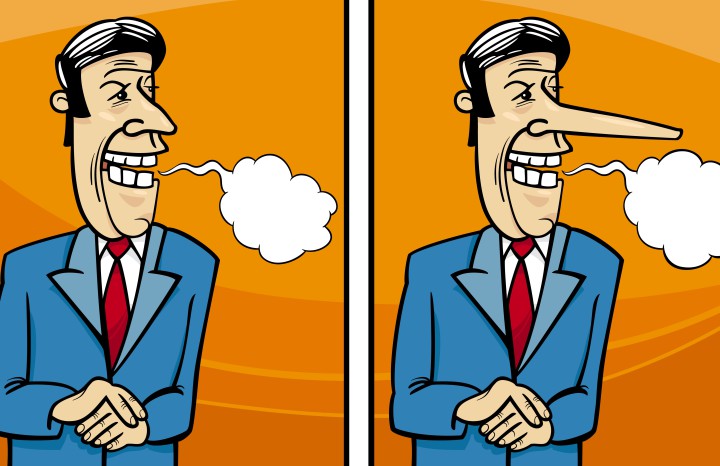
    No, it’s not a typo. Megative is a word I’ve coined to describe the tendency some people have to puff everything up; everything is mega. Megative people use awesome and world-class to describe even the most average and mundane things. To them, everything is the greatest, or the absolute worst. There is very little middle ground or nuance, because moderation is for sissies. More familiar synonyms are hyperbole, puffery, immoderation and bullshit, and in this post-truth time we’re living in, it appears to be getting more and more common. But is it bad? Is megative negative?

    If I were to be megative, I would stake out an extreme position and tell you it’s the worst thing in the world or the best. But the truth is, it depends.

    First, it depends on why or how it’s used. There are four types of megativity which I can think of. (There may be more, but since I made up the word, I can claim to be the world’s greatest expert on it.) Starting from the most positive and heading downhill from there, they are:

    • Built-in megativity, which is a natural part of your personality. The best example I can think of is my friend John Spence, who looks at the brightest possible side of anything he encounters; even when you think he overdoes things, you don’t mind because his enthusiasm is infectious.
    • Marketing megativity, which is using it as an effective tool for influence, as in the examples I’ve described. People may discount it, but they see it as a legitimate form of expression, and in fact if you aren’t exaggerating a little, maybe you’re not trying hard enough.
    • Dunning-Kruger megativity, so named because of the psychological effect whereby those who are least competent in a topic are most self-confident. D-K megativity is ignorant self-delusion, where you actually think you are the world’s greatest. By coincidence, the initials match nicely what I call DK², which is when you don’t know what you don’t know.
    • Bald-faced lying. When Trump says such and such a policy will be terrific, it’s tough to tell whether it’s marketing or self-delusion. But when he says he won one of the greatest landslides in history, that’s outright lying. (Obviously, since he won the election, it worked for him. But you’re not him and you’re a serious business communicator, so don’t try it.)

    Megative statements have the power to persuade, or they can backfire on you. Let’s look at the pros and cons:

    The Pros

    The first two types of megativity can make you a more persuasive communicator, for the following reasons:

    It can grab the audience’s attention. In his new book, Thank You for Being Late, Thomas Friedman writes: “The moment that Steve Jobs introduced the iPhone turns out to have been a pivotal junction in the history of technology and the world.” You can’t get any more megative than that. Whether you agree or disagree with the statement, you’re compelled to keep reading, to find out why he says that or how he backs up such a brash statement.

    Megative statements are especially useful to snap your audience into attention at the beginning of presentations. Once, I taught a class on presentations to senior executives, and I began by saying: “Welcome to possibly the most important class you will ever take.” When I said that, I had every eye in the room riveted on me, and I knew I had them. (However, note that a truly megative person would not have used the word possibly.)

    Megative statements, even though they are by definition less likely to be true, can actually make you more credible because they exude confidence, and confidence sells. Being social animals, humans are exquisitely sensitive to verbal and nonverbal cues that indicate relative levels of status within groups. Those who act more assertively and confidently tend to be accorded higher status, and in general are perceived to be more competent than they actually are.[1]

    Megative talk sells, because it shows passion and enthusiasm. As the world’s master of megative talk says: “People may not always think big themselves, but they can still get very excited by those who do. That’s why a little hyperbole never hurts. People want to believe that something is the biggest and the greatest and the most spectacular.”

    Megative talk may also harness the power of anchoring. While they may discount your initial evaluation, it’s possible that they won’t adjust enough, so you end up closer to where you wanted to be. It’s similar to what Robert Cialdini calls the “Door In The Face” (DITF) influence technique, where you ask for something outlandish and get refused, and then your next request seems much more reasonable.

    The Cons

    The last two forms of megativity can easily backfire on you.

    Others will automatically discount what you say. Megative statements can be like swearing in that they have shock value at first which quickly wears off the more you use them. You also run the risk that the audience will quickly adjust to your statements and automatically discount what you say. Like a drug, you’ll have to use stronger and stronger language just to achieve the same effect.

    Megativity is less effective with certain audiences. For example, I work a lot with engineers and scientists who place a huge premium on data to back up what you say. So, if you are going to use it, be prepared to back it up.

    At some point, you may be called upon to put your money or your performance where your mouth is. Dunning-Kruger megativity can get you in a ton of trouble, because your claims will inflate expectations that you will then have to meet—and that’s not likely to end well.

    Please spread the word—literally! With your help, megative will be the biggest word of 2017, maybe even 2016 if you act now!!!!!

    [1] Cameron Anderson, Sebastien Brion, Don A. Moore, and Jessica A. Kennedy, A Status-Enhancement Account of Overconfidence, 2012.
  • What Can You Learn About Persuasion from Post-Truth Politicians?

    What Can You Learn About Persuasion from Post-Truth Politicians?

    One of the principal pillars of Practical Eloquence is that even though emotional appeals can be hugely powerful, content is still king. In other words, the only way to get your ideas accepted consistently is to be honest and not let your claims get ahead of your facts.

    But along comes Donald Trump and seemingly blows that idea right out of the water. As a student of persuasive communication, I’ve been both fascinated and repelled by the 2016 political season, which has led the Oxford Dictionaries to tag “post-truth” as their word of the year. Wikipedia defines post-truth is defined as “a political culture in which debate is framed largely by appeals to emotion disconnected from the details of policy, and by the repeated assertion of talking points to which factual rebuttals are ignored.” That’s a nice precise definition, but to be perfectly clear, post-truth, in my book, equates to emotion, exaggeration and even bald-faced lies.

    It worked spectacularly for Trump, so will it work for you in business communication—whether in sales or in trying to get your ideas accepted within your organization? What can you learn about persuasion from him and the other post-truth politicians and pundits?

    There are two lessons that you should absorb from the success of post-truth politicians. First, it worked because Trump has shown himself to be a master at sensing what is on the minds of his audiences, and tuning his message into perfect resonance with their emotional state. One gets the sense that he is a virtuoso in at least two legs of what Daniel Goleman calls the empathy triad: cognitive empathy and emotional empathy. The third leg is empathic concern, and your guess is as good as mine on that one.

    The second lesson that you might be able to apply—if you’re careful with it—what Trump himself calls “truthful hyperbole”. With truthful hyperbole, everything is wonderful or huge or terrific or world-class, and every statement contains multiple!!!!! It works, because even if you don’t objectively believe the description, it’s hard to avoid being swept up into the enthusiasm and confidence of the technique. But you have to be careful to know where to draw the line; what happens when truthful hyperbole becomes mere hyperbole is a topic I will cover in my next post.

    Those benefits aside, here are four reasons you would not want to adopt a post-truth approach to your persuasion efforts.

    You’re not Trump.  You don’t bring celebrity, money or a large staff of people who can clean up after you if you make a mistake. Plus, it’s part of what people expect from him—it’s a central feature of his ethos. I strongly doubt that you can dominate a room with that level of charisma, and if you try to “fake it ‘til you make it”, see how far that will get you. Never forget that your listeners often have the power to tell you, “you’re fired!”

    It’s too early to tell. Post-truth persuasion worked got elected, but will it work in getting things done in the actual job, where details matter and above all measurable results count? He has definitely sold the sizzle, but it remains to be seen whether the actual steak will be any good. Emotions tend to wear off, but truth endures, and facts are stubborn things. That’s one reason that organizations have created decision processes to avoid impulsive decisions.

    The decisions that you’re trying to influence are different. Millions of people—probably the vast majority of voters—filtered their information and made their decisions through the lens of their personal ideology or identity. Business decisions are different for the most part. Most people don’t get so personally involved when making a choice between the Acme and the Amalgamated widgets.

    The deciders are different. Especially when pitching ideas to senior executives, the people you are trying to influence are generally more sophisticated in their approach to decision-making, at least in the subject matter of what you’re selling. They’ve trained themselves to be more analytic and empirical, and those decision processes mentioned above are also designed specifically to guard against individual bias.

    To sum up, there may be a post-truth era in politics, but I strongly doubt that it’s coming to business or interpersonal communication anytime soon. As the announcer reminds you: “Don’t try this at home!”

  • At the End of 2016, We Desperately Need to Remember These Two Ideas

    At the End of 2016, We Desperately Need to Remember These Two Ideas

    Regardless of whether your candidate won or lost, the 2016 political season in the US has seriously undermined two key beliefs that I have long had about persuasive communications. The first is that the truth matters, and the second is that moderation of thought and expression is a virtue. Maybe I’ve taken them for granted because I’ve thought that both of these ideas are obvious, but it’s clear that someone needs to speak out in their defense.

    Two of those defenders—whose opinions and approach I greatly respect—are Josh Bernoff, author of Writing Without Bullshit, and Peter Wehner,  a columnist for the New York Times. Since they can say it much better than I can, I simply give you these two links, and strongly recommend you read them:  

    Bernoff: The Truth Foundation

    Wehner: Moderate Is Not a Dirty Word (This is the title of the print edition of the opinion in the NYT; different than the online edition for some reason.)

  • Do You Suffer from Negotiation Fear?

    Do You Suffer from Negotiation Fear?

    My son was in line to pay at a Starbucks coffee shop one time, and observed the following exchange between the man just in front of him in line to pay and the barista:

    Man: How much is that pastry?

    Barista: Three dollars.

    Man: I’ll give you two.

    Barista: Sir, this is Starbucks; the price is the price.

    Man: Let me speak to your manager.

    Manager: What seems to be the problem?

    Man: I’ll give you two dollars for that pastry. If you don’t sell it soon, you’re going to have to throw it out.

    Manager: OK.

    My son (stepping up to pay): I’d like a dollar off my bill, please.

    Do you hate to negotiate? Many people hate to, or fear to. They meekly pay the asking price no matter how high nor who’s asking.

    On the other hand, some people seem congenitally incapable of accepting the first offer, and will argue about price at the drop of a hat. I used to work with a guy named Don, and one time in Canada there were three of us at a steak restaurant and we were all considering ordering the prime rib. Don called the waiter over and negotiated a volume discount! I wanted to quietly slide under the table, but Don just blithely went on his way. The waiter put his foot down when Don tried the same tactic with dessert, though.

    As this educational video demonstrates, people who don’t like to negotiate will always be at the mercy of those who do.

    I used to be firmly in the camp of those meek souls who find haggling to be either frightening, distasteful, or immoral, but I’ve learned to come a long way. Not quite like Don, but I’ve learned that negotiation is perfectly acceptable, profitable and even fun.

    My awakening came about in a funny way. I was teaching a sales training class with my boss one December. We were scheduled for two days of straight sales skills and one day of negotiations training. I had never seen the negotiation module and my role was to observe and learn. Unfortunately, my boss got called away unexpectedly and told me that I would have to deliver the module the next day. I spent most of the night going over the material and rehearsing my delivery, and was able to pull off a decent performance. I can’t say for sure how much the students learned about negotiating, but I know I learned a ton, which I proved to myself when I went to buy my wife a present at a mall jewelry store. I picked the one I wanted, and then offered them half the price on the tag if I paid cash. I ended up getting it for 30% off.

    Since that time, I’ve negotiated with many parties in many different countries. I haven’t always been as successful as I would have wanted, but one thing I have found out for sure: it never hurts to ask.